THE SOLO FOUNDER CYCLE: EXCITEMENT, PLATEAU, ONBOARDING REALITY, AND SHIPPING TOWARD VALUE
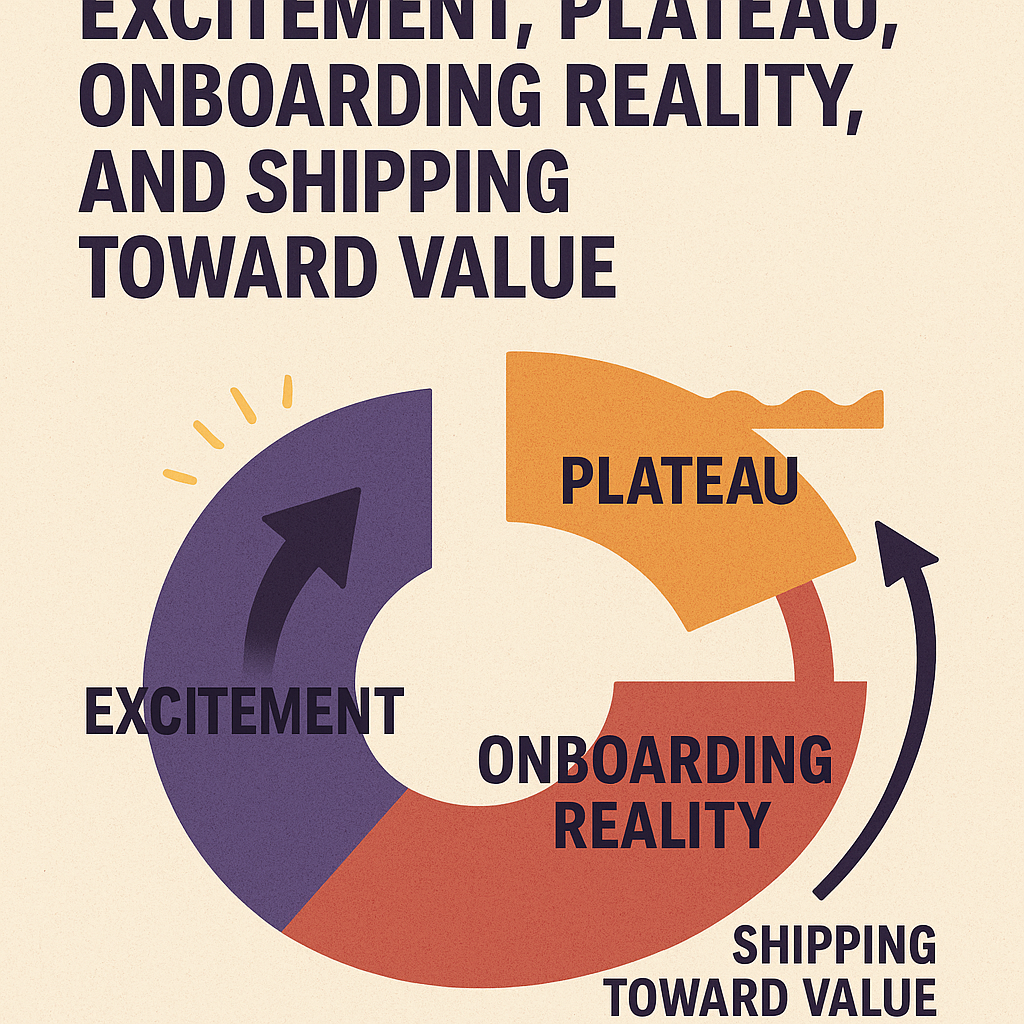
imagining the finished product you want to build is always exciting, but a funny thing happens as you go from idea to execution: a lot of times, after doing market research and talking to real people, you realize your “dream” was just that a dream. and for the projects with genuine potential, you start out excited… and eventually that excitement reaches a plateau.
I say this especially as a solo founder who’s bootstrapping everything. when you’re building alone, you don’t have the luxury of riding endless momentum. you have to keep your eyes on the goal even when the motivation fades.
The cycle of product development i keep experiencing
I believe product development tends to move through phases that recreate this same cycle:
- initial excitement (you can see the vision clearly)
- reality checks (market research, onboarding, feedback)
- plateau (progress slows, uncertainty increases)
- focus as a survival skill (you rely on experience more than hype)
at some point, you stop waiting for motivation. you keep going because you’ve been through it before and you know the next phase will teach you something.
onboarding: where you learn what’s real
one of the most important phases is your first set of onboarding: getting people to try the product and then collecting honest feedback. but onboarding doesn’t always look like what you expect. you can onboard different types of users, and each type tells you something different:
- users who never actually use the product
- users who only use the trial period
- users who think they’ll get value then realize what they experienced is a “hot mess” (i’ve definitely seen this, more than once)
the goal isn’t just to collect feedback. it’s to listen for patterns and answer a few key questions:
- who actually sees value?
- who gets stuck—and why?
- who is willing to pay (not just “like the idea,” but pay because they need it)?
once you see that, you can start niching down and looking for users with similar problems—the ones who represent the real potential you originally believed in.
feature requests: capture everything, but don’t follow everything
during onboarding, you’ll get feature requests. lots of them. some will be helpful. some will distract you. my approach is:
write them down no matter how ridiculous they sound be honest enough to recognize when they don’t align with the product’s goal
for example, one feature request i got recently was the ability to preview uploaded files in the knowledge base.
at first, i dismissed it. it felt like something that “should” exist or at least something i thought i would have naturally implemented.
but when i slowed down and re-evaluated, the real question came to me:
why would someone upload a document to a knowledge base if they can’t view what they uploaded?
that reframed it completely. it wasn’t just a “nice-to-have.” it was about clarity, trust, and usability so it deserved reconsideration.
that’s the pattern i’m learning: feature requests can be annoying, but they’re also often the clearest signal of where your product experience isn’t communicating value yet.
keep progressing toward the main goal
amidst all of this onboarding, listening, prioritizing, capturing feedback you still need to make forward progress toward the main goal.
i’ll be candid: ragsimple is about 40% right now. there’s still a lot to build into it.
but i’m learning a lot on this path, and honestly, i think that’s the most important part: not rushing to “finish,” but building in a way that turns feedback into direction.
takeaway
As a solo founder, you’ll likely face a repeating cycle:
excitement at the beginning plateau when reality sets in onboarding that reveals who truly values your product feature requests that can distract—or teach you what to fix and the need to keep building toward the core goal, even if you’re only ~40% there
if you’re building too: what kind of feedback are you getting most often right now—confusion, missing features, unclear value, or something else?